
How Many 60 lb Bags for 1.5 Yards of Concrete?
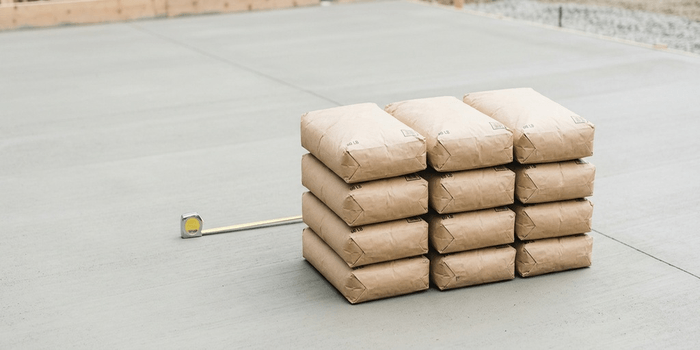
1.5 cubic yards converts to 40.5 ft³ of concrete. At an assumed 0.45 ft³ yield, that works out to 90 60 lb bags before waste. A 10% example increases the estimate to 99 bags; the baseline represents 5,400 lb of dry mix, before water. At 1.5 cubic yards, this is a labor-intensive bagged mix plan rather than a simple quick repair. Confirm the product yield, actual form measurements and placement plan before purchasing.
Choose Your Calculator
Bag Calculator
Adjust volume, bag size, and waste assumptions to get a custom count.
Open Bag CalculatorSlab Calculator
Need to calculate dimensions first? Start with slab size, thickness, and volume.
Open Slab CalculatorLooking for more conversions? Browse all bag pages
Bag Count at a Glance
Bag yield used: 0.45 ft³ per bag. Bag yield guide
Large batch: once bag counts get this high, compare the cost and labor against ready-mix delivery before buying.
Project Notes
For 1.5 cubic yards, the base order is 90 bags of 60 lb (5,400 lb dry mix). A 5% example gives 95 bags; 10% gives 99. Check the printed yield and choose an allowance from actual excavation, forms and handling losses, rather than automatically adding 10%. Ask about pallet quantities, delivery and unloading; compare bulk supplier quotes in cubic yards.
Do not confuse the 1.5 cubic yards concrete volume with the capacity of a vehicle or mixer. Moving 5,400 lb of dry mix may require delivery or multiple legally and safely loaded trips. Check delivery access for ready-mix early; a supplier minimum charge may still compare favorably with moving and mixing many bags. Never assume bag count alone proves a slab will handle vehicles or equipment.
For a 1.5 cubic yards placement using 90 60 lb bags, plan the finish and curing procedure for the actual mix and weather before opening bags. Keep the water addition within the manufacturer's instructions and avoid long gaps between adjacent placements. Protect the fresh surface from rapid moisture loss and unfavorable temperatures; do not use a fixed 28-day age as automatic approval for heavy loading.
Practical Tips for 1.5 yards
The calculation covers 1.5 cubic yards of placed concrete (40.5 ft³), not a pre-approved slab, footing or repair design. At 1.5 cubic yards, this is a labor-intensive bagged mix plan rather than a simple quick repair. If bags remain necessary, make a realistic batch schedule and confirm curing and finishing instructions for the selected mix. Thickness, soil support, reinforcement, joints and anticipated loading must be decided for the real application; those requirements cannot be inferred from 90 bags alone.
This option means handling 90 separate 60 lb bags weighing approximately 5,400 lb dry in total, excluding added water, tools and packaging. The 60 lb size reduces the number of sacks compared with 40 lb while still demanding careful handling and suitable mixing equipment. At this bag count, mixing rate and placement continuity deserve a specific plan rather than a casual DIY assumption. Confirm the available vehicle payload, delivery access and mixer throughput instead of assuming all materials can arrive or be placed in one trip.
For 1.5 cubic yards, 90 60 lb bags represent approximately 5,400 lb of dry material, so a ready-mix quote should be part of the plan. Compare delivery minimums, truck access, placing equipment, crew time and finishing capacity against repeated bag mixing; neither method is automatically cheaper or appropriate at every site.
Worked Example for 1.5 yards with 60 lb Bags
Step-by-step calculation for this exact volume and bag size:
- Volume in cubic feet: 40.50 ft³ (= 1.500 yd³ × 27)
- Bag yield: 0.45 ft³ per 60 lb bag
- Base count before rounding: 40.50 ÷ 0.45 = 90.00 → round up to 90 bags
- With 10% waste on the volume: (40.50 × 1.10) ÷ 0.45 = 99.00 → round up to 99 bags
- Total weight: 90 × 60 lb = 5,400 lb
Bag Counts by Waste Buffer for 1.5 yards
Pick a buffer based on site conditions: clean forms and accurate volume can run leaner; rough subgrade or hard-to-reach pours need more cushion.
| Buffer | 60 lb bags | Total weight |
|---|---|---|
| No buffer tight pour | 90 | 5,400 lb |
| +5% typical DIY | 95 | 5,700 lb |
| +10% recommended | 99 | 5,940 lb |
| +15% rough conditions | 104 | 6,240 lb |
How Many 40, 60 & 80 lb Bags for 1.5 yards
Same volume, three common bag sizes. Bigger bags mean fewer units to mix but more weight per lift; smaller bags are easier to handle but the count climbs fast.
| Bag size | Bags needed | With 10% waste | Total weight |
|---|---|---|---|
| 80 lb bags | 68 | 75 | 5,440 lb |
| 60 lb (this page) | 90 | 99 | 5,400 lb |
| 40 lb bags | 135 | 149 | 5,400 lb |
Counts use standard yields (0.30 / 0.45 / 0.60 ft³ per 40 / 60 / 80 lb bag) and are rounded up. Confirm the yield printed on your product label before buying.
How to Use This Estimate
Confirm volume
Start with 1.5 yards and verify whether your total is in cubic feet or cubic yards.
Check bag yield
This page assumes 0.45 ft³ per 60 lb bag.
Add waste
Use the 5% or 10% buffer if you expect spillage, uneven forms, or small measurement errors.
Planning Ahead for 1.5 yards
When bagged concrete makes sense: smaller pours, simple DIY jobs, and areas where a ready-mix truck is inconvenient.
When to compare ready-mix: once bag counts become very high, delivery may save labor and time. See our concrete cost per yard guide.
Scope check: a pour this size is a substantial job. Hand-mixing this many bags is labor-intensive, so plan for help, timing between batches, and compare ready-mix before committing.
For more tools and conversions, try our concrete calculator or run counts in the bag calculator.
Questions People Ask About This Estimate
How many 60 lb bags of concrete do I need for 1.5 cubic yards?
Using an assumed yield of 0.45 ft³ per 60 lb bag, divide the measured 40.5 ft³ by 0.45 and round the result up to a whole bag: 90 bags before any waste allowance. That is about 5,400 lb of dry product. The cubic-yard volume converts to cubic feet at 27 ft³ per yard. Check your manufacturer's yield; other mixes can differ.
What changes if I allow 5% or 10% extra concrete for 1.5 cubic yards?
For 1.5 cubic yards in 60 lb bags, the base estimate is 90 bags. Applying the allowance to the unrounded concrete volume gives 95 bags at +5% and 99 at +10%; a +15% scenario would be 104. These are examples, not a universal recommendation. Select an allowance based on field measurements, uneven subgrade, formwork and likely placement losses, then check the supplier's ordering increments.
How much material would 90 60 lb bags weigh before mixing?
The estimated dry bag load is 5,400 lb (90 bags × 60 lb), before adding water or equipment. The 60 lb size reduces the number of sacks compared with 40 lb while still demanding careful handling and suitable mixing equipment. Arrange a safe unloading and staging location and check vehicle limits. At this bag count, mixing rate and placement continuity deserve a specific plan rather than a casual DIY assumption. The volume estimate does not specify a safe crew size or mixing rate.
Would ready-mix be worth comparing for 1.5 cubic yards?
The estimate involves 90 60 lb bags, or approximately 5,400 lb of dry material before waste. Ready-mix delivery is worth comparing even if the project seems manageable on paper. Ask local suppliers about minimum orders and access, and factor in hauling, mixer capacity, labor and how long placing and finishing will take. Bagged concrete can be viable in some settings, but volume alone cannot determine structural suitability or the best supply method.
Related Guides
How Many Bags of Concrete Do I Need?
Calculating the number of bags of concrete you need depends on your project volume and the bag size you choose. This guide walks you through…
Ready-Mix Ordering Tips: Access, Scheduling & Common Fees
Ordering ready-mix concrete involves more than just calling a supplier and requesting a delivery. Access logistics, timing coordination, site preparation, and understanding typical fees all…
Bagged vs Ready-Mix Concrete Cost: How to Compare
Bagged concrete looks cheaper when you compare price tags at the store. Eighty-pound bags cost a fraction of what ready-mix delivery charges. But price per…
Concrete Curing Basics: Why It Matters & How to Do It – Best Practices
Curing is the single most important factor determining concrete’s long-term durability, surface hardness, and resistance to scaling, dusting, and fine cracking. Yet it’s also the…
Estimate a Custom 60 lb Bag Job
Use our calculators to adjust volume, waste, and bag size for your exact project.