
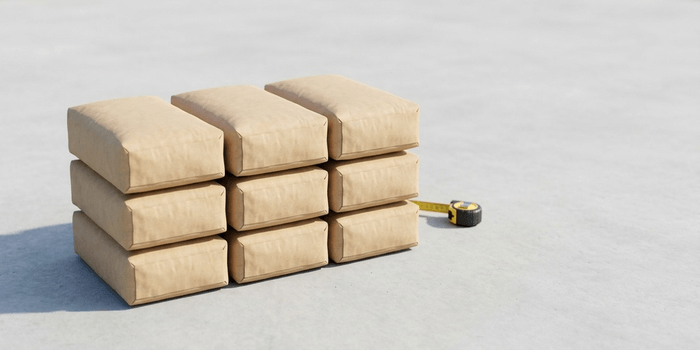
How Many 40 lb Bags for 1.5 Yards of Concrete?
A 1.5 yards volume requires a total of 135 bags of 40 lb concrete, making it suitable for small slab pours like patios and walkways.
Choose Your Calculator
Bag Calculator
Adjust volume, bag size, and waste assumptions to get a custom count.
Open Bag CalculatorSlab Calculator
Need to calculate dimensions first? Start with slab size, thickness, and volume.
Open Slab CalculatorLooking for more conversions? Browse all bag pages
Quick Answer
Bag yield used: 0.3 ft³ per bag. Bag yield guide
Large batch: once bag counts get this high, compare the cost and labor against ready-mix delivery before buying.
Project Notes
Check the bag yield on the label before buying, then think through the combined transport weight so you do not overload your vehicle or underestimate the effort.
Avoid underbuying by miscalculating the yield, which can lead to incomplete projects.
Ensure surface drying is monitored to avoid issues with finish quality.
Practical Notes
With 1.5 yards of concrete, you're well-equipped for projects like patios and small slab pours. This quantity is ideal for creating durable surfaces in compact spaces.
You'll need approximately 135 bags, totaling around 5,400 pounds. Plan for multiple trips to transport and stage these heavy bags safely.
Using bagged concrete is practical for smaller projects, but if you're tackling larger areas, consider ready-mix for efficiency and reduced hauling.
How to Use This Estimate
Confirm volume
Start with 1.5 yards and verify whether your total is in cubic feet or cubic yards.
Check bag yield
This page assumes 0.3 ft³ per 40 lb bag.
Add waste
Use the 5% or 10% buffer if you expect spillage, uneven forms, or small measurement errors.
Planning Notes
When bagged concrete makes sense: smaller pours, simple DIY jobs, and areas where a ready-mix truck is inconvenient.
When to compare ready-mix: once bag counts become very high, delivery may save labor and time. See our concrete cost per yard guide.
For more tools and conversions, visit the Concrete Calculator hub.
Frequently Asked Questions
What does bag yield mean and how can I check it?
Bag yield indicates how much concrete you can expect from a single bag; it's usually listed on the label for your reference.
Should I round up when ordering bags?
Yes, rounding up is advisable to account for waste during mixing and placement.
When is bagged concrete the best choice for my project?
Bagged concrete works well for small projects like patios, walkways, and shed slabs where convenience is key.
In what situations might ready-mix concrete be more suitable?
Ready-mix might be better for larger pours or projects requiring precise mixing and delivery.
Related Guides
Ready-Mix Ordering Tips: Access, Scheduling & Common Fees
Ordering ready-mix concrete involves more than just calling a supplier and requesting a delivery. Access logistics, timing coordination, site preparation, and understanding typical fees all…
Bagged vs Ready-Mix Concrete Cost: How to Compare
Bagged concrete looks cheaper when you compare price tags at the store. Eighty-pound bags cost a fraction of what ready-mix delivery charges. But price per…
Concrete Curing Basics: What “Curing” Means & Best Practices
Curing is the single most important factor determining concrete’s long-term durability, surface hardness, and resistance to scaling, dusting, and fine cracking. Yet it’s also the…
Concrete PSI Explained: 3000 vs 4000 (What You Actually Need)
Concrete strength is specified in PSI—pounds per square inch—and the most common residential mixes are 3000 PSI and 4000 PSI. The difference sounds technical, but…
Need a Custom Bag Count?
Use our calculators to adjust volume, waste, and bag size for your exact project.