
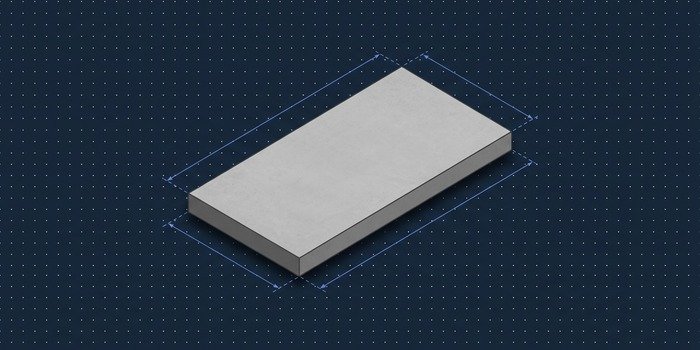
8×20 Concrete Slab (4 inches): Yards, Feet & Bags
An 8 ft x 20 ft concrete slab at 4 inches thick works well for a patio or gazebo base. Decide between bags or ready-mix based on your site access and waste factor.
Choose Your Calculator
Slab Calculator
Enter any custom length, width, and thickness to get cubic yards and bag counts.
Open Slab CalculatorBag Calculator
Choose 40/60/80 lb bag sizes and estimate counts for your exact volume.
Open Bag CalculatorWant other sizes? Browse all slab size pages
Quick Answer
Tip: Always confirm the yield printed on your bag label. Bag yield guide
Project Notes (Unique)
Round to 0.25 yd³ when ordering and check yield on the label to ensure you have enough material.
Ensure your base is well-prepped and forms are securely in place to prevent shifting during pouring.
Finish the surface as desired and allow it to cure properly for optimal strength and durability.
Choosing the Right Slab Thickness for 8×20
For a walkway, a 4-inch slab fits many medium load jobs, but subgrade quality, reinforcement, and local requirements still matter.
Current spec
This page estimates a 8×20 slab poured at 4 inches.
Load check
Best fit depends on whether this is mainly pedestrian use, storage, or heavier wheel traffic.
Upgrade trigger
If you expect heavier loads later, compare this design against the alternate thickness before ordering.
Subgrade and Form Prep for 8×20
Most slab problems start below the concrete. Keep the base level, compacted, and consistent before you pour.
- Strip loose topsoil and organic material until you reach firm subgrade.
- Compact the base in lifts so the 8×20 slab does not settle unevenly.
- Check form height and diagonal measurements before concrete arrives.
- Plan reinforcement, joints, and edge support based on the intended walkway use.
Worked Example for 8×20 at 4 Inches
Step-by-step calculation for this exact slab:
- Convert thickness to feet: 4 ÷ 12 = 0.3333 ft
- Compute area: 8 × 20 = 160 sq ft
- Volume in cubic feet: 160 × 0.3333 = 53.33 ft³
- Convert to cubic yards: 53.33 ÷ 27 = 1.975 yd³
- Add 10% waste buffer: 1.975 × 1.10 = 2.173 yd³
Concrete Delivery Strategy for 8×20
This slab needs about 1.98 yd³ of concrete, or 89 80 lb bags before waste. With a waste cushion, plan around 2.17 yd³.
For this volume, ready-mix is usually the safer plan. Round up, confirm delivery minimums, and make sure your crew can place and finish the slab without delays.
Adjust dimensions in the slab calculator or compare bag counts here.
Bag Counts by Waste Buffer for 8×20
Pick a buffer based on site conditions: smooth forms and good subgrade can run leaner; uneven excavation or hard-to-reach pours need more cushion.
| Buffer | Yards (yd³) | 80 lb bags | 60 lb bags | 40 lb bags |
|---|---|---|---|---|
| +5% tight pour | 2.07 | 94 | 125 | 187 |
| +10% typical | 2.17 | 98 | 131 | 196 |
| +15% rough subgrade | 2.27 | 103 | 137 | 205 |
Cure Timeline for a 8x20 Concrete Slab
For a walkway slab, light foot traffic may come sooner than vehicle loads, but finishing quality still depends on keeping the slab damp and protected early on.
First 24 hours
Protect edges, prevent washout, and avoid unnecessary traffic while the slab sets.
Days 2-7
Maintain curing conditions and monitor joints, surface drying, and weather exposure.
Up to 28 days
Concrete keeps gaining strength, so wait for the right service window before heavy use.
How to Estimate This Slab in 3 Steps
Measure
Length 8 ft, width 20 ft, thickness 4 in.
Compute Volume
Area: 160 sq ft → volume: 53.3 ft³ → 1.98 yd³.
Add Waste
Add a small buffer for spillage and uneven subgrade, then round up when ordering.
Planning Notes
Common uses: patio, gazebo base, walkway section.
For more context and conversions, try our concrete estimator, run counts in the bag calculator, or browse our bag conversion pages for common volumes.
Frequently Asked Questions
What’s better for my project: bags or ready-mix concrete?
Bags offer flexibility for smaller projects, while ready-mix is more efficient for larger slabs, especially when access is easier.
How should I prepare the base for my concrete slab?
Clear the area of debris, level the ground, and compact it to create a stable foundation for the slab.
What thickness should I choose for my concrete slab?
A thickness of inches is generally suitable for patios and walkways, but consider the load and usage to determine if more is needed.
How can I minimize waste when ordering concrete?
Estimate your needs carefully and account for a buffer to avoid running short, especially if using bags which can be less forgiving.
Related Slab Sizes
Ready to Calculate Your Project?
Get instant estimates for cubic yards, cubic feet, and bag counts. No signup required.