
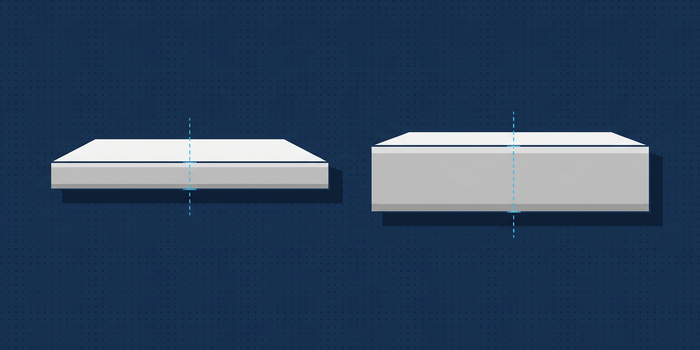
Choosing the right concrete slab thickness is one of the most important decisions in any concrete project. While both 4-inch and 6-inch slabs are common in residential construction, each serves different purposes and performs best under specific conditions. This guide explains the practical differences between these two thicknesses, when to use each one, and how factors like load, soil conditions, and reinforcement affect your choice. Understanding these distinctions helps you avoid over-building and wasting money, or under-building and risking premature failure.
Quick Answer
4-Inch Slabs
A 4-inch concrete slab is the standard for light residential applications like patios, walkways, and residential driveways with normal passenger vehicle traffic. This thickness provides adequate strength for foot traffic and typical car weights when poured over a properly prepared gravel base. Most patios, sidewalks, and single-family driveways use 4-inch slabs with good results, especially when reinforced with wire mesh or fiber.
6-Inch Slabs
A 6-inch slab offers substantially more load capacity and durability, making it the preferred choice for garage floors, driveways serving heavier vehicles, and slabs supporting storage sheds or workshop equipment. The additional two inches increases structural strength significantly while adding only modest material cost. Commercial applications, areas with poor soil conditions, and locations expecting heavy or frequent vehicle traffic typically require 6-inch minimum thickness.
Rule of Thumb
Use 4 inches for foot traffic and light residential vehicles on good soil. Go with 6 inches when you expect heavier vehicles, frequent traffic, questionable soil conditions, or need extra durability. When in doubt, the incremental cost of upgrading to 6 inches is usually worth the peace of mind and extended service life. Always check local building codes, as some jurisdictions mandate minimum thicknesses for specific applications.
Browse Pre-Calculated Slab Sizes
See ready-made concrete estimates for common 4″ and 6″ slab dimensions—no math required.
Key Factors That Determine Slab Thickness
Several interconnected factors influence whether a 4-inch or 6-inch slab is appropriate for your project. Understanding how these variables interact helps you make informed decisions rather than simply defaulting to contractor recommendations or industry minimums.
Load and Traffic
The type and frequency of loads your slab will bear is the primary factor in thickness selection. Foot traffic generates minimal stress on concrete, easily handled by a 4-inch slab. Passenger cars also work well on 4-inch slabs when weight is distributed across tire contact areas. However, trucks, RVs, boats on trailers, and work vehicles create concentrated loads that benefit from 6-inch thickness.
Consider not just the weight but the frequency of loads. A driveway used daily by multiple vehicles experiences more cumulative stress than one used occasionally. Similarly, a garage floor supporting a heavy workbench or machinery may need extra thickness even though the loads are stationary. Dynamic loads from moving vehicles are more demanding than static loads from stored equipment.
Soil and Base Conditions
Strong, stable soil can support thinner slabs, while weak or expansive soils require thicker concrete to span between support points. Clay soils that expand when wet and shrink when dry create uneven support that stresses concrete. Sandy or gravelly soils typically provide excellent, stable support. If your site has problematic soil, increasing thickness to 6 inches helps the slab bridge over areas of differential settlement.
The quality of your base preparation matters as much as native soil conditions. A properly installed gravel base, thoroughly compacted, provides uniform support that allows thinner slabs to perform well. Poor base preparation with soft spots, voids, or inconsistent compaction compromises even thick slabs. Never try to compensate for inadequate base preparation by simply pouring thicker concrete.
Reinforcement Choices
Reinforcement significantly affects how concrete performs at different thicknesses. Wire mesh, commonly used in 4-inch residential slabs, helps control shrinkage cracking but provides limited structural benefit. Rebar, especially when properly positioned in the lower third of the slab, adds substantial tensile strength that allows concrete to span longer distances and carry heavier loads.
Fiber reinforcement, whether synthetic or steel fibers mixed throughout the concrete, helps control plastic shrinkage cracking and adds impact resistance. Fibers don’t replace structural reinforcement like rebar but complement it well. A 4-inch slab with proper rebar may outperform a plain 6-inch slab without reinforcement. When specifying thickness, always consider it alongside your reinforcement strategy rather than in isolation.
Climate and Freeze-Thaw Exposure
Cold climates subject concrete to freeze-thaw cycles that can cause deterioration over time. When water penetrates concrete, freezes, and expands, it creates internal pressure. Thicker slabs resist this damage better than thin ones, and the extra mass helps moderate temperature swings. In northern climates, 6-inch slabs last longer than 4-inch slabs, especially for exterior applications like driveways exposed to deicing chemicals.
Air-entrained concrete, with microscopic bubbles that provide relief space for freezing water, is essential in freeze-thaw zones regardless of thickness. Combining proper air entrainment with 6-inch thickness and good drainage provides maximum durability. If your area experiences harsh winters, the upgrade to 6 inches pays dividends in reduced maintenance and longer service life.
Control Joints and Cracking Strategy
Concrete inevitably cracks as it shrinks during curing. Control joints create predetermined weak points where cracks form in straight lines rather than random patterns. Thicker slabs generally require closer control joint spacing because increased mass means more shrinkage stress. Joint spacing recommendations vary based on concrete mix, weather conditions, and local practice.
The relationship between thickness and cracking isn’t always straightforward. Very thin slabs crack easily under load, but excessively thick slabs crack from shrinkage stress if joints are inadequate. Work with your thickness choice to establish appropriate joint spacing. Proper jointing matters more for long-term appearance than the difference between 4 and 6 inches in many residential applications.
Common Slab Thickness by Project Type
Different project types have evolved standard thickness specifications based on decades of real-world performance. These standards provide good starting points, though your specific conditions may warrant adjustments.
| Project Type | Standard Thickness | Upgrade Considerations |
|---|---|---|
| Patios | 4 inches | 6 inches for outdoor kitchens, heavy furniture, or poor soil |
| Walkways | 4 inches | Rarely needs more; focus on good base and drainage |
| Residential Driveways | 4 inches (cars only) 6 inches (trucks/RVs) |
6 inches for heavy vehicles, frequent use, or weak soil |
| Garage Floors | 5-6 inches | 6 inches standard; 5 inches acceptable for light use |
| Shed Pads | 4 inches | 6 inches for heavy equipment storage or workshop use |
| Barn Floors | 6 inches minimum | May need thicker for heavy equipment or livestock |
Patios and Walkways
Backyard patios and connecting walkways typically receive only foot traffic and occasional furniture loads, making 4-inch thickness perfectly adequate. The key to long-lasting patio performance isn’t extra thickness but proper site preparation, good drainage away from the slab edges, and appropriate control jointing. A well-built 4-inch patio over compacted gravel outlasts a poorly prepared 6-inch slab every time.
Consider upgrading to 6 inches if your patio will support an outdoor kitchen with heavy masonry, a built-in fire pit, large planters, or other concentrated loads. Hot tubs require special structural consideration beyond simple thickness increases. For standard furniture and foot traffic, save money with 4 inches and invest in quality finishing instead.
Driveways
Residential driveways represent a middle ground where either 4 or 6 inches can work depending on specific conditions. A home with standard passenger vehicles parked daily does fine with 4 inches when built properly. A household with pickup trucks, an RV, a boat trailer, or frequent delivery vehicles should opt for 6 inches. The modest additional cost provides substantial peace of mind against cracking from concentrated wheel loads.
Driveway width, length, and turning areas also influence thickness needs. Long, narrow driveways benefit from 6-inch thickness because they concentrate traffic in one path. Wide driveways with multiple parking spots distribute loads better, potentially allowing 4 inches. Turning areas where vehicles pivot create higher stress and benefit from either thicker concrete or additional reinforcement.
Garage Floors
Garage floor slabs should be 5 to 6 inches thick in most residential applications. Unlike driveways that only experience rolling loads, garage floors support stationary vehicle weight for extended periods. The slab also anchors door tracks, supports storage systems, and often serves as a workshop floor. Six inches is the professional standard that provides durability for these multiple demands.
Some homeowners opt for 5-inch garage slabs as a compromise between cost and performance. This works acceptably for standard passenger vehicles and typical garage use. If you plan to use your garage for heavy tool storage, woodworking equipment, or park larger vehicles, specify 6 inches. The additional inch costs little during initial construction but can’t be added later without complete slab replacement.
Shed Pads and Light Structures
Storage sheds, small workshops, and similar light structures typically sit well on 4-inch slabs. The slab primarily keeps the building dry and level rather than supporting significant loads. A standard lawn equipment storage shed creates minimal floor loads that 4 inches easily handles. Ensure the slab extends beyond the building perimeter to prevent water infiltration along edges.
Workshop buildings housing heavy equipment, welders, compressors, or extensive tool storage should have 6-inch floors. These concentrated loads combined with dynamic forces from equipment operation benefit from extra strength. Similarly, sheds in areas with expansive clay soils should upgrade to 6 inches to resist differential settlement that could rack the structure above.
When to Go Thicker Than 6 Inches
While 4 and 6 inches cover most residential needs, certain situations demand even greater thickness. Recognizing these special cases prevents expensive failures and ensures long-term performance.
Heavy Vehicles or Frequent Loads
Commercial trucks, heavy equipment, or frequent delivery vehicles may require substantially thicker slabs depending on axle weights and wheel loading. A concrete slab supporting regular forklift traffic, for example, needs engineering analysis beyond typical residential standards. If your project involves unusual vehicles or equipment, consult a structural engineer rather than extrapolating from residential guidelines.
Agricultural applications often need thicker slabs. Barns, equipment storage buildings, and shop floors supporting tractors, combines, or loaded trucks may need significantly reinforced concrete. These slabs function more like structural pavements than simple residential slabs. Don’t attempt to adapt residential thickness standards to commercial or agricultural situations without professional input.
Poor Subgrade or Weak Base
When confronted with exceptionally weak soil conditions like soft clay, organic soils, or fill material, increasing thickness alone may not solve the problem. Sometimes soil remediation, deeper excavation, or alternative foundation systems prove more effective than simply pouring thicker concrete. An excessively thick slab on terrible soil often performs worse than a properly engineered standard slab on improved subgrade.
If soil testing reveals significant problems, work with a geotechnical engineer or experienced contractor to develop a complete solution. This might involve removing poor soil, installing deep gravel bases, using geotextile fabrics, or incorporating void forms that allow controlled settlement. Thickness is one tool among many for dealing with soil challenges, not a universal solution.
Edge Thickening and Perimeter Considerations
Even when the main slab is 4 or 6 inches, perimeter edges often benefit from increased thickness called a “thickened edge” or “turned-down edge.” This creates a footing effect that provides better bearing on soil and resists frost heaving in cold climates. A slab with standard field thickness might have substantially deeper edges around the perimeter.
Edge thickening is particularly important for slabs supporting structures like garages or shops where the building load concentrates at the perimeter walls. The thickened edge distributes these loads deeper into stable soil. This detail adds minimal concrete cost but significantly improves performance. Discuss edge treatment with your contractor as part of your overall thickness specification.
Local Requirements and Structural Situations
Building codes establish minimum standards based on local conditions, climate, and construction practices. Some jurisdictions mandate specific minimum thicknesses for garage floors regardless of use. Others specify thickness based on frost depth, soil classification, or seismic considerations. Always verify local requirements before finalizing your thickness decision.
Unusual structural situations like slabs spanning between foundation walls, suspended slabs over crawl spaces, or slabs supporting masonry fireplaces require engineering calculations specific to your project. Generic thickness guidelines don’t apply to these special cases. Hire a structural engineer to design these applications properly rather than guessing at appropriate thickness.
Planning Tips Before You Pour
Proper planning ensures your chosen thickness translates into successful concrete performance. These practical steps help you move confidently from thickness decision to finished slab.
Measure the Area and Confirm Thickness
Accurate measurements are essential for ordering the right amount of concrete. Measure your slab length and width carefully, accounting for any irregular shapes or multiple sections. Verify the thickness you want by physically checking the depth of your excavation and forms. Assuming one thickness when you’ve actually built forms for another wastes concrete and money, while discovering insufficient depth after the truck arrives creates problems.
Use our Slab Calculator to convert your dimensions and thickness into cubic yards. The calculator handles the math reliably and helps you visualize how thickness affects volume. For example, changing from 4 to 6 inches increases concrete volume by fifty percent—a significant cost difference that should factor into your thickness decision.
Add a Small Waste Buffer and Round Up
Always order five to ten percent more concrete than calculated volume to account for measurement variations, uneven base, spillage, and over-excavation. This buffer ensures you have enough material to complete your pour without running short. Running out of concrete mid-pour forces you to order additional material at premium prices and creates cold joints that weaken the slab.
When ordering, round up to the nearest quarter or half yard depending on supplier practices. It’s better to have a small amount left over that you can use for post holes or stepping stones than to stop pouring before your forms are filled. Most suppliers have minimum order quantities that may exceed your calculated need on small projects anyway.
When to Choose Ready-Mix vs Bags
Thickness affects your choice between ready-mix delivery and bagged concrete. A 4-inch slab covering a modest area requires less volume than the same area at 6 inches. As thickness increases, the labor of mixing bags becomes prohibitive and ready-mix becomes the clear choice.
For projects under one cubic yard, bags offer flexibility despite higher per-yard cost. Between one and two yards, evaluate your labor capacity and time constraints. Above two yards, ready-mix is almost always the better choice regardless of thickness. See our concrete calculator and bag calculator for detailed comparisons based on project size.
Tools & Size Pages
Calculate Exact Volumes
Determine concrete needs for any slab thickness with instant calculations.
Browse Pre-Calculated Sizes
View ready-made concrete estimates for common 4″ and 6″ slab dimensions.
Related Tools
Frequently Asked Questions
Is 4 inches thick enough for a concrete driveway?
Yes, 4 inches is adequate for driveways serving standard passenger vehicles when built over a properly compacted gravel base with appropriate reinforcement. This thickness has been the residential standard for decades and performs well under normal car and light truck traffic. However, if you regularly park heavier trucks, RVs, boats on trailers, or other substantial vehicles, upgrading to 6 inches provides better long-term durability and reduces cracking risk from concentrated wheel loads.
How much stronger is a 6-inch slab compared to 4-inch?
A 6-inch slab is approximately fifty percent thicker than a 4-inch slab, but its load-carrying capacity increases more than proportionally due to how structural members resist bending. The thicker section resists deflection substantially better, typically providing significantly more effective strength against bending stress. This makes 6-inch slabs much more durable under heavy or repeated loads, though the exact improvement depends on reinforcement, concrete strength, and support conditions.
What thickness should I use for a garage floor?
Most residential garage floors are 5 to 6 inches thick, with 6 inches being the professional standard. This thickness handles typical vehicle storage, workbench loads, and storage systems well. Some builders use 5 inches for basic garages housing only passenger cars, while workshops with heavy equipment or garages storing larger vehicles should have 6-inch floors. The modest cost difference between 5 and 6 inches usually favors choosing 6 inches for the added durability and future flexibility.
Can I pour 4 inches in some areas and 6 inches in others?
Yes, you can vary thickness within a single pour, though it requires careful planning and proper transition details. For example, a driveway might be 4 inches in lightly loaded sections but thicken to 6 inches in parking areas or near garage doors where loads concentrate. Create gradual transitions rather than abrupt steps, and ensure forms accommodate the thickness changes. Discuss this approach with your concrete contractor to ensure proper execution.
Does a thicker slab need more reinforcement?
Not necessarily in terms of quantity, but reinforcement placement becomes more critical as thickness increases. In both 4-inch and 6-inch residential slabs, standard wire mesh or rebar spacing works well, though the reinforcement should be positioned in the lower third of the slab regardless of thickness. Thicker slabs may benefit from slightly larger rebar sizes or closer spacing in heavy-load applications, but typical residential projects don’t require dramatically different reinforcement based solely on thickness.
How much more does a 6-inch slab cost than 4-inch?
A 6-inch slab requires fifty percent more concrete volume than a 4-inch slab of the same area. Material cost increases proportionally, though delivery fees and labor don’t scale the same way. On typical residential projects, upgrading from 4 to 6 inches adds material cost that represents a modest percentage increase in total project budget. This small absolute dollar amount often provides worthwhile performance benefits for the additional investment.
Will a 4-inch slab crack more than a 6-inch slab?
Not necessarily. Cracking depends more on proper control joints, adequate reinforcement, good curing practices, and stable support conditions than on thickness alone. A well-built 4-inch slab with proper jointing and reinforcement typically cracks less than a poorly detailed 6-inch slab. That said, thicker slabs tolerate subgrade variations better and resist stress from heavy loads more effectively, which can reduce random cracking in demanding applications. Focus on overall quality rather than expecting thickness alone to prevent cracks.
Can I change my mind about thickness after excavation?
Yes, but it’s easier to go thinner than thicker. If you’ve excavated for 6 inches but decide 4 inches is adequate, you can add gravel base to reduce the concrete depth. Going thicker after excavating for a thinner slab requires removing more soil, which adds labor and disrupts site preparation you’ve already completed. Make your thickness decision early in planning, ideally before excavation begins, to avoid rework and additional expense.
Do I need special tools to pour a thicker slab?
No, the same basic tools work for both 4-inch and 6-inch residential slabs. You’ll use the same screeds, floats, trowels, and edging tools regardless of thickness. The main difference is that thicker slabs require more concrete volume, meaning trucks may take longer to pour and you’ll need more time for finishing. Thicker slabs also take slightly longer to set up enough for finishing operations, which can be advantageous in hot weather by providing more working time.
Should I consult an engineer about slab thickness?
For standard residential patios, walkways, and driveways under typical conditions, engineering isn’t usually necessary—experienced contractors know appropriate thickness standards. However, consider engineering consultation for unusual situations like very poor soil conditions, heavy equipment loads, structural slabs spanning between supports, or commercial applications. The modest engineering fee provides valuable assurance that your thickness choice and overall design will perform as intended.
How do I calculate concrete needed for my thickness choice?
Use our Slab Calculator to determine exact concrete volume for any thickness. Enter your slab length, width, and thickness, and the calculator instantly provides cubic yards, cubic feet, and estimated bag counts. The calculator accounts for waste factors and helps you compare costs between different thickness options. This removes guesswork and ensures you order the right amount of material for your chosen thickness.
Does climate affect whether I should choose 4 or 6 inches?
Yes, harsh climates favor thicker slabs. Freeze-thaw cycles in northern regions stress concrete more severely than mild climates. The additional mass of a 6-inch slab moderates temperature swings and provides better resistance to frost damage. Hot climates with expansive clay soils also benefit from thicker slabs that better span over differential soil movement. If you experience extreme weather conditions, lean toward 6 inches even for applications where 4 inches might suffice in mild climates.
Ready to Calculate Your Slab?
Disclaimer
This guide provides general information about concrete slab thickness for typical residential applications. Actual thickness requirements vary based on local building codes, soil conditions, intended use, and specific project circumstances. Always verify requirements with local building authorities and consider consulting a structural engineer for projects involving unusual loads, poor soil conditions, or commercial applications. The calculators and estimates provided are for planning purposes only and do not replace professional engineering judgment or local code compliance.