
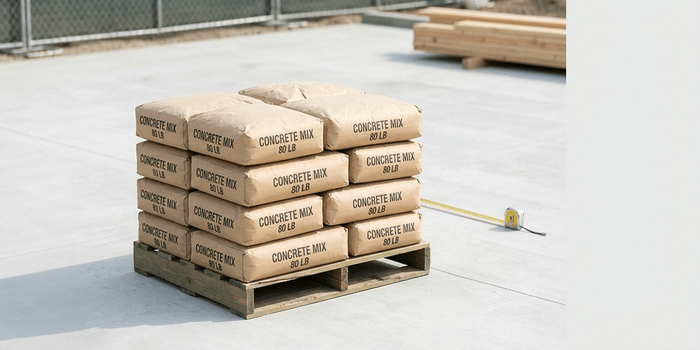
How Many 60 lb Bags for 2.5 Yards of Concrete?
For a project requiring 2.5 yards of concrete, you'll need approximately 150 bags of 60 lb each to ensure ample coverage.
Choose Your Calculator
Bag Calculator
Adjust volume, bag size, and waste assumptions to get a custom count.
Open Bag CalculatorSlab Calculator
Need to calculate dimensions first? Start with slab size, thickness, and volume.
Open Slab CalculatorLooking for more conversions? Browse all bag pages
Quick Answer
Bag yield used: 0.45 ft³ per bag. Bag yield guide
Large batch: once bag counts get this high, compare the cost and labor against ready-mix delivery before buying.
Project Notes
Check the bag yield on the label and plan for how many store trips the total weight may require, especially if you are buying in smaller batches.
Avoid ordering too many batches, as this can lead to excess material and increased costs.
Aim for steady placement to maintain an even surface and avoid complications during curing.
Practical Notes
This 2.5 yards of concrete is ideal for larger slab pours, such as garage approaches or expansive patios, providing a solid foundation for heavy-duty applications.
Handling 150 bags weighing a total of 9,000 pounds requires careful planning—consider staging bags in manageable groups to streamline your workflow.
For extensive projects, bagged concrete is convenient but can be labor-intensive; if your needs exceed this amount, ready-mix may be a more efficient choice.
How to Use This Estimate
Confirm volume
Start with 2.5 yards and verify whether your total is in cubic feet or cubic yards.
Check bag yield
This page assumes 0.45 ft³ per 60 lb bag.
Add waste
Use the 5% or 10% buffer if you expect spillage, uneven forms, or small measurement errors.
Planning Notes
When bagged concrete makes sense: smaller pours, simple DIY jobs, and areas where a ready-mix truck is inconvenient.
When to compare ready-mix: once bag counts become very high, delivery may save labor and time. See our concrete cost per yard guide.
For more tools and conversions, visit the Concrete Calculator hub.
Frequently Asked Questions
What is bag yield and why is it important?
Bag yield refers to the amount of concrete that a single bag can produce. Checking the yield on the label ensures you order the correct number of bags for your project.
Should I order extra bags for my project?
It's a good idea to round up your estimate, as having some extra material can cover any unexpected waste or miscalculations.
When is bagged concrete a suitable choice?
Bagged concrete works well for projects like large patios, garage approaches, and multi-section pours, providing flexibility and ease of use.
In what situations might ready-mix be a better option?
Ready-mix can be more practical for very large pours or projects requiring specific concrete mixes that bagged options may not provide.
Related Guides
Ready-Mix Ordering Tips: Access, Scheduling & Common Fees
Ordering ready-mix concrete involves more than just calling a supplier and requesting a delivery. Access logistics, timing coordination, site preparation, and understanding typical fees all…
Bagged vs Ready-Mix Concrete Cost: How to Compare
Bagged concrete looks cheaper when you compare price tags at the store. Eighty-pound bags cost a fraction of what ready-mix delivery charges. But price per…
Concrete Curing Basics: What “Curing” Means & Best Practices
Curing is the single most important factor determining concrete’s long-term durability, surface hardness, and resistance to scaling, dusting, and fine cracking. Yet it’s also the…
Concrete PSI Explained: 3000 vs 4000 (What You Actually Need)
Concrete strength is specified in PSI—pounds per square inch—and the most common residential mixes are 3000 PSI and 4000 PSI. The difference sounds technical, but…
Need a Custom Bag Count?
Use our calculators to adjust volume, waste, and bag size for your exact project.